Fractional snow cover vs binary snow/no-snow classification, explained
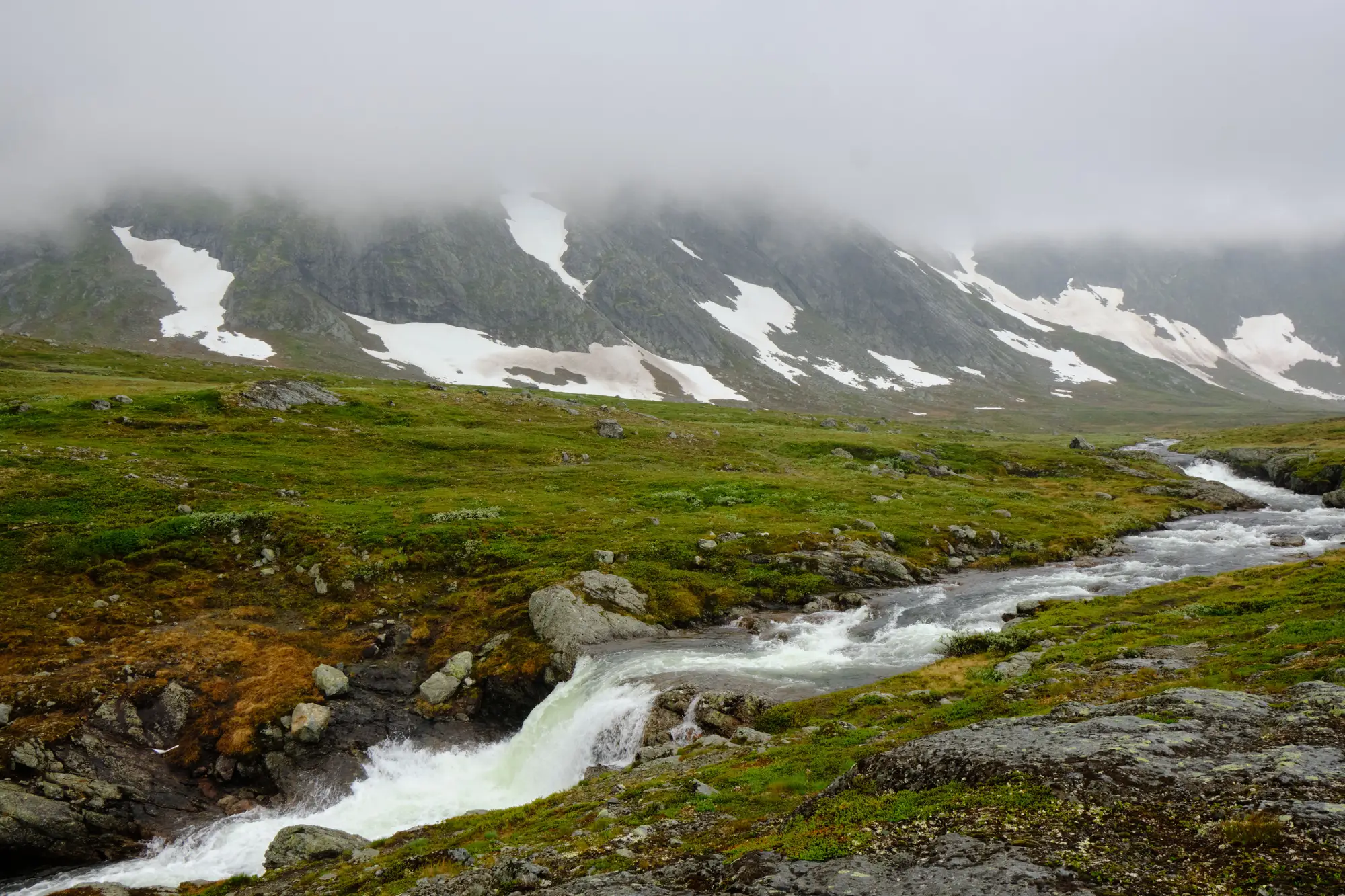
When a basin sits at 40% bare and 60% covered, the real question isn't whether there's snow left. It's how much, where, and how fast that number is dropping. That's the difference between fractional snow cover and binary snow/no-snow classification, and it's worth knowing which one you're reading before you build a melt forecast on it.
What a snow/no-snow classification tells you
A binary snow/no-snow product sorts every pixel into one of two buckets: covered or bare. No partial credit. A pixel that's 95% snow and a pixel that's 5% snow get coded the same way if the threshold sits below 50%, or the opposite way if it sits above. For a wide-swath multispectral pass at 10 to 30 m resolution, that threshold decision happens on every pixel, every day, and it's the reason binary classification is fast to compute and easy to read on a map. You get a clean snowline. You get melt-out dates, the day a given point flips from covered to bare, which is exactly the number a forecast desk circles on the calendar.
The tradeoff is that binary classification throws away everything in between. A patchy, sun-cupped snowfield that's half rock and half snow gets flattened into a single answer. Early in melt season, when SWE is dropping but a lot of the basin is still patchy rather than fully bare, that flattening can make the snowline look more decisive than the melt state really is on the ground.
Where fractional snow cover fills the gap
Fractional snow cover, sometimes written as snow cover fraction or FSC, estimates the percent of each pixel that's covered by snow. Instead of a yes/no map, you get a continuous surface: 0% here, 35% there, 80% over there. For a forecaster tracking a basin through the ragged middle of melt season, that's the difference between seeing "this elevation band is still snow-covered" and seeing "this elevation band is 30% bare and thinning."
The catch is that fractional retrievals ask more of the sensor and the algorithm. Mixed pixels, shadowed terrain, forest canopy, and thin or old snow all push error into the fraction estimate in ways a binary call shrugs off. A binary snow/no-snow product is more forgiving of exactly the conditions where fractional products struggle hardest: broken canopy, variable illumination, melting-out patchy snow.
Which one answers a streamflow question
For a basin-by-basin melt-out timeline, binary classification is usually the sharper tool. It gives a repeatable, daily answer to "has this basin cleared yet" without asking you to interpret a percentage. The melt-out date it produces, the day the snowline retreats past a given point, is the number that drives a streamflow warning. Once a basin's snow cover drops off, the question shifts from "how much is left" to "how fast is the runoff pulse arriving."
Fractional snow cover earns its keep when you need to track the shape of the retreat, not just its endpoint, especially across a basin with a wide elevation range where the snowline doesn't move as a clean front. But if the deliverable you need is a daily classification and a time series of when each basin's snow cover drops off, binary is the simpler, more defensible signal, and it's easier to QA at scale across a whole basin network.
Snow Cover Monitoring runs the daily binary classification and feeds the melt-out time series straight to a console, API, or CSV, basin by basin, so you're watching the snowline retreat instead of waiting on the next field survey.
If your forecast desk needs that retreat tracked basin by basin before the river tells you first, that's the gap this is built for.