Field notes: the basin that melted out early, and the gauge that didn't believe it
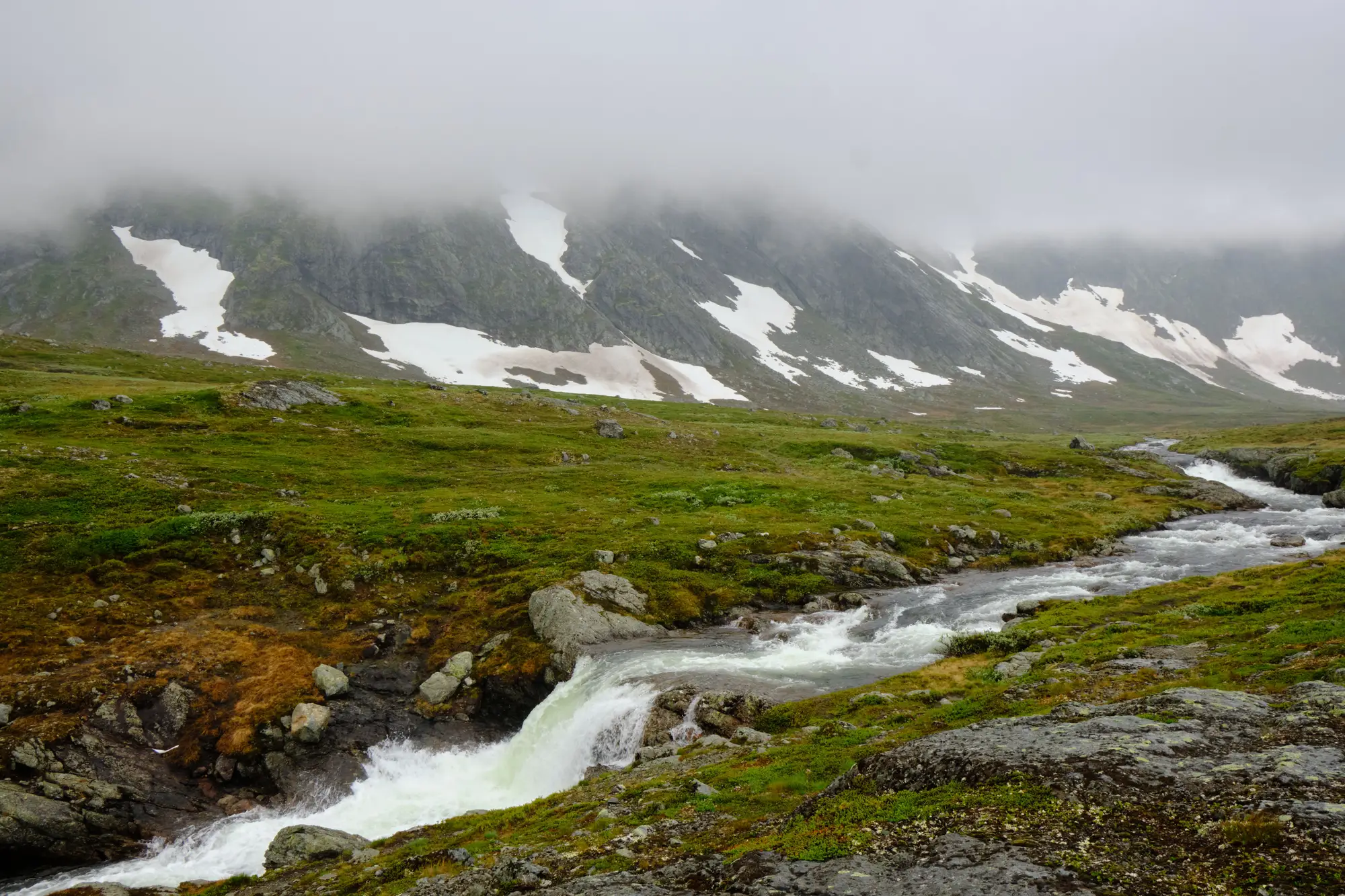
There's a particular kind of quiet that settles over a forecast desk in late April, when the snowline has already pulled back off the valley floor and started working its way up through the mid-elevation band, and the hydrograph at the outlet gauge is still sitting flat. Not falling. Not rising. Just flat, like nothing upstream has changed at all.
This spring we watched one basin do exactly that, and it's worth writing down while the pattern is still fresh.
By the third week of April, daily snow/no-snow classification showed bare ground had already opened up on the south-facing slopes below about 2,100 meters, a full two weeks ahead of where that basin's melt-out curve usually sits this time of year. The upper bowls still held their pack, but the lower third of the contributing area, the part that normally drives the first pulse of the freshet, had gone from solid white to patchy to gone in under ten days. A warm, dry air mass had parked over the range and just sat there, and the snowline retreated under it like the bathtub had been drained from the bottom.
The gauge didn't move.
That's the part that throws people who haven't chased this before. The instinct is to assume early melt-out means early rise, that the snowline and the hydrograph are reading the same clock. They aren't. The basin's outlet was waiting on the ground underneath the melt to recharge before it would pass water through. The soil column had gone into the season with a real moisture deficit after a dry fall, and the first week and a half of meltwater didn't make it to the channel at all. It went into refilling depleted storage in the lower hillslopes, the kind of antecedent condition that never shows up on a satellite pass but shows up immediately in how much of that early melt pulse the basin keeps for itself.
So you had two true things happening at once. The basin had, by any reasonable definition, melted out early. And the gauge, reading only what actually reached the channel, had every right not to believe it yet.
The response came, eventually, about twelve days later, once the soil moisture deficit filled in and the remaining pack at elevation started contributing in earnest. By then the rising limb was steeper than a normal-timing year would produce, because two melt sources, the delayed lower-basin water finally reaching the channel and the upper-bowl pack now also going, arrived close together instead of staggered over weeks. The desk had already flagged the early snowline retreat as a watch item well before that happened, which bought real lead time on the warning, even though the gauge itself gave almost no advance notice at all.
That's the real value of watching the snow cover instead of waiting on the gauge to confirm it. The gauge tells you what the basin has already decided to send downstream. The snowline tells you what the basin is working with, days to weeks before that decision gets made. A desk that only trusts streamflow data is, by definition, always a step behind the basin's own physics. We built a console around daily snow/no-snow classification and basin-by-basin melt-out timing at Snow Cover Monitoring specifically because that gap between retreat and response is where the useful warning window lives, not after the rise starts.
None of this means the snowline is a substitute for the gauge. It means it's an earlier witness, and this spring it was the only one willing to say something was moving before the river agreed.
If your desk has a basin that's prone to this kind of lag, it's worth tracking the melt-out date against the historical response window for a season or two and seeing where the gap tends to land.